
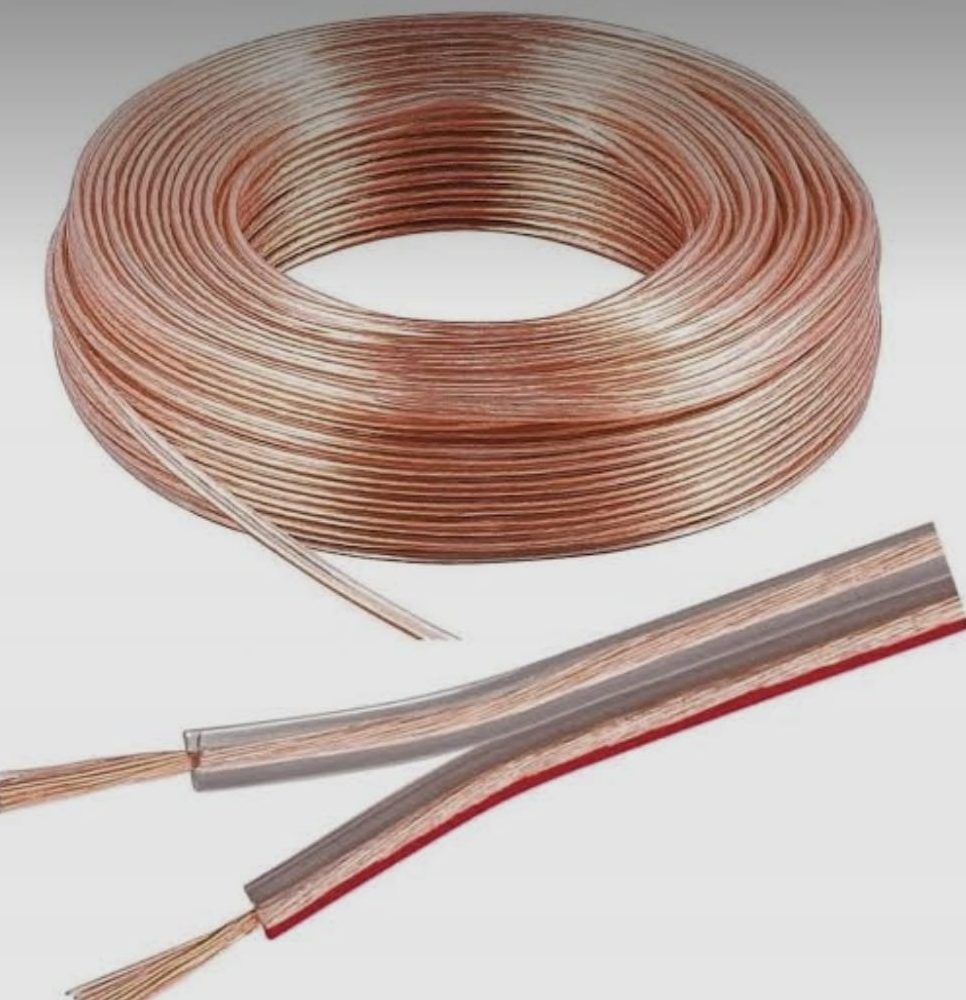
Speaker wire carries the amplifier's signal to your speakers. Choosing the right thickness and connecting it correctly makes a real difference to sound quality.
Thickness depends on distance
- Short runs (a few metres, bookshelf speakers): a thinner wire is usually fine.
- Longer runs (rear speakers, ceiling speakers, PA systems): use a thicker wire so the speaker gets full power.
- Low impedance speakers (4 ohm) and high power systems also need thicker wire.
Rule of thumb: the longer the run and the more powerful the system, the thicker the wire.
Polarity matters
Each speaker has + and – terminals. If one speaker is connected the other way round, bass sounds weak. Speaker wire has a stripe or coloured marking on one side — always connect the marked core to + on both the amplifier and the speaker.
Installation tips
- Strip only as much insulation as needed and twist the strands tightly.
- Use banana plugs or tight screw terminals to avoid loose strands.
- Keep both channels the same length for a balanced sound.
See Kanak speaker wires with high-strand copper and clear insulation with polarity marking.